Wednesday, 12 October 2016

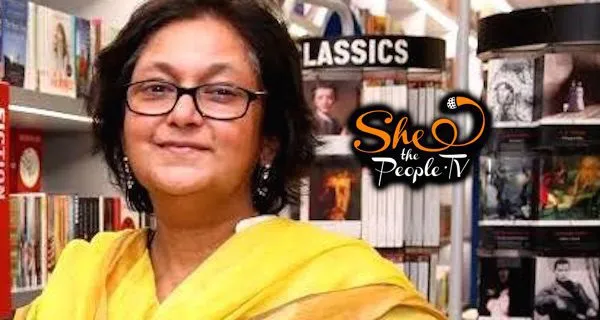
India’s major literature festivals are powered by women - My special feature for SheThePeople.tv

It’s Lit Fest season. Yes, it’s that time of the year when thousands of readers (and many more non-readers) across the country are all set to attend an assorted array of Lit fests. Almost every major city in India has a lit fest of its own and the metros have multiple. Lit fests have as many detractors as lovers and whatever said and done, it is not easy to put together and pull off a successful one. In such a saturated environment, it takes a whole lot to stand out and bring something different to the table every year, year after year. Behind these lit fests are immensely passionate and dedicated teams who often spend their time and energy (and at times even money) just for the love of books and reading. Leading some of these teams which organise the best lit fests in India, are multi-tasking, multi-talented women. Let us take a quick look at some of the women who work day and night in order to ideate and implement some of our favourite literary jamborees, and what they have to say about their experiences:
1.     Namita Gokhale – Jaipur Lit Fest, Bhutan Lit Fest, Crime Writers’ Fest
If Jaipur Lit Fest (JLF) is the mother of all Lit Fests, Namita is the queen of JLF. Along with William Dalrymple, she co-founded and co-directs the world’s largest free lit fest, in India’s Pink City. JLF has also had successful editions at Boulder, Colorado and Southbank, London. Apart from JLF, she also runs ‘Mountain Echoes’, the annual Bhutan Lit Fest, and the Crime Writer’s Festival in Delhi.
Gokhale is committed to showcasing literature from across the Indian languages.  She has written twelve books. In a chat with SheThePeople.TV, she says
“It has been a privilege to be associated with so many literature festivals. The Jaipur literature festival is part of my life rhythm.”
The Namita Gokhale Interview
“People tend to relegate women to being convenient ‘back room girls’. I don’t like to indulge in gender stereotyping but women are sometimes more conscientious and detailed in admin matters, and I enjoy working with them. One thing I bring to all the festivals I direct is the insistence that we resist mansplaining manelist sessions and bring in feminine voices and experiences into sessions.”
 2.     Shinie Antony- Bangalore Lit Fest, Bengaluru Poetry Fest, Bangalore Biz Lit Fest
Writer, Editor and Columnist Shinie Antony is Co-founder and Director of India’s largest community-funded lit fest and second largest literary conclave- the Bangalore Literature Festival (BLF). She is also director of the Bengaluru Poetry Festival (BPF) and Bangalore Business Lit Fest (BBLF) – the first of their kind in India. She has written short story collections, novels and has compiled anthologies. Shinie is calm, composed and committed and a curator who is as cool as a cucumber. While BLF will see its 5th edition take place in December this year, the BBLF has completed 2 editions and the BPF debuted to astounding response from poetry lovers, earlier this year.
“Being a woman is largely incidental. What I bring to the table is a team worker’s spirit and my sensibilities as a reader and writer.”
 3.     Bachi Karkaria- Times Litfest Mumbai
One who needs no introduction, veteran journalist and columnist Bachi Karkaria is well-known in the industry for her sharp insights and path-breaking innovations that have time and again helped the Times of India Group stay ahead of competitors in the market. The Times Litfest is perhaps another such initiative of one of India’s journalistic stalwarts. Her enthusiasm and energy are infectious and these qualities certainly come across in the vibe that the Times Litfest in Mumbai carries. A festival that has very much grown into an ‘ideas fest’, it represents all the passions of the city of Mumbai.
“Our authors and audience gratify us with decency and grace, though some of the big names can be a pain. However, overall, it has been a great journey and a rewarding experience.

BombayWaali: Bachi Karkaria
Times Literature Fest: Bachi Karkaria
Though I don’t think gender makes a difference as far as one’s ability to pull off a successful lit fest is concerned, as a woman, I think multi-tasking comes naturally to me, and this is certainly helpful. Also, patience and efficiency in handling tricky situations and thinking out-of-the-box. In fact, at points, I have had to deal with some authors with a great deal of tact and have gotten away with them being a little less churlish.”
 4.     Sagarika Ghose- Times Litfest Delhi
After the tremendous success year-after-year of the Mumbai edition, the The Times of India Group, under the able leadership of Sagarika Ghose, started their very own lit fest in Delhi. The New Delhi-born Sagarika is a journalist, former television news anchor and an Author. She is currently consulting editor at The Times of India. Right in its very first year, the event was held on a large scale and managed to fill the vacuum in Delhi’s lit fest calendar that lacked an event of a certain magnitude that the city could call its own.

Sagarika Ghose: Picture by SheThePeople
5.     Manjiri Prabhu- Pune International Literary Festival
Manjiri Prabhu is an English Author, Film-maker and Founder-Director of the Pune International Literary Festival. Labelled ‘Desi Agatha Christie’, Dr. Manjiri Prabhu has published 8 books till date. The Pune International Lit Fest is the city’s first and only English language lit fest and has completed 4 editions.
6.     Nirmala Lakshman- The Hindu Lit for Life
The Hindu is perhaps part of the average Chennai citizen’s DNA. Reading the newspaper with a piping hot cup of filter coffee is still a beloved habit of many Chennaiites. It is the only newspaper in the country to have a supplement wholly dedicated to books and literature- the Literary Review. Nirmala founded and edited The Hindu Literary Review and the Lit for Life was started in 2010- when this supplement completed 20 years of publication.
Nirmala was Joint Editor of The Hindu and has held senior editorial positions at the newspaper for more than three decades. She launched and curated Lit for Life and initiated the annual Prize for Fiction from The Hindu.
7.     Maina Bhagat and Anjum Katyal- Kolkata Literary Festival
Director of Oxford Bookstore Maina Bhagat along with editor, writer, translator and critic Anjum Katyal jointly direct the Kolkata Literary Festival. The Kolkata lit fest has been happening for the past 7 years. What makes it unique, is the fact that unlike the other major lit fests that have all their events happening at a single hotel/college, this festival has its venues spread across the city, with the Oxford Bookstore acting as the fulcrum. Apart from the Oxford Bookstore, the other venues include heritage buildings and well-known landmarks of Kolkata- thereby bringing the city to life… bringing the people of the city, known to be art, culture and literature lovers alive.
“Our lit fest is an extension of the 98 year-old Oxford Bookstore. It is a continuum of our year-long involvement with books. Love for books and reading is the basis from where it all started.
As a woman, I think it helps to gauge everyone’s sensibilities while curating the festival. Of course, women’s issues play a large part in our festival, just like they play a major role in several other lit fests as well. However, the content that goes into the sessions is largely based on my experiences, and not my gender.”-Maina Bhagat to SheThePeople.TV
Feature Image Credit: AllAboutJaipur.com
Note the list is in no particular order

http://shethepeople.tv/indias-literature-festivals-are-powered-by-women/

From A Gallery To Classes, Studio Olive Brings Together All Things Art - My piece for LBB Bangalore

What Is It?

Studio Olive is an art gallery which also offers classes and artistic services.

Where Is It?

Located on St. John’s Road {in the lane next to the Aegis building}, the studio is a 2-5 minute walk from Commercial Street.

Arty Space

Studio Olive is situated in the heart of the city, yet nestled away from all the noise and pollution – a perfectly-located island of creativity. Apart from being an art gallery, the space also has art classes for all ages in a cute, friendly, green atmosphere. Run by artist and former adman, Ajai Chavan {who has forayed into teaching and creating art full-time}, the place offers customised courses based on your age and availability of time. With classes on everything from sketching and shading to calligraphy and abstract painting, it is a convenient option for all those who love art and craft, but can’t seem to fit it into their busy schedule.
Ajai also specialises in knife art, knife painting, tribal art, and Mexican art. So, students might even get to learn some unconventional techniques from the experienced artist. Affordable to all, yet kept classy and exclusive, he tries to make high-quality art {think mixed media, oil and acrylic works} accessible to all. Also, the environment that has a workshop, classes as well as a studio, is perfect for art enthusiasts.

#LBBTip

Look out for the coasters, trays and clothes {designed by Ajai} available at the studio.
Where: 40, St. John’s Road, Next to Aegis Building. Near Ulsoor lake
Price: INR 3,000 upwards for paintings, fees for classes depend on the course and schedule
Contact:+91 9845256244, studioolive40@gmail.com
Timings: 10am – 5pm
https://lbb.in/bangalore/studio-olive-ulsoor

Daily Dump: Quick Solutions to Garbage Disposal Right At Home - My piece for LBB Bangalore

The Scoop

Founded by Poonam Bir Kasturi {an industrial designer}, Daily Dump deals mainly with their flagship terracotta pots – to dump your daily wet waste into, and convert it into organic, high quality manure.

The Store

Located in Indiranagar, Daily Dump’s offices are located in a large, spacious compound, where they have different models of pots available for display and demos. They also have a cute store that sells organic seeds, garden tools, composting powder, cloth bags, and more. It has an earthy look and feel. The founder is mostly always present at the store and will happily have a chat with you.

What We Love

The number of options; you get to pick according to usage, quantity of waste generated, and space available. Their flagship product is the Khamba {or stack composter}, which is a set of three terracotta pots that sit one on top of the other. They also have specialised composters for specific purposes {for instance, to compost dry leaves from your garden}. The well-informed staff are helpful and take the time to explain the ecological benefits of their products.

Who Is It For

It’s for anyone who would like to help tackle the city’s garbage crisis by starting segregation and composting at source. The pots from Daily Dump are designed beautifully, come in different colour variants, are modular and don’t take up much space at home and most importantly, do not emit a foul smell of any sort. All it takes is a little extra care and effort in managing your garbage and with time…Voila! The compost is ready to be used in your garden or for that matter, even sold to others who need it!

#LBBTip

While they do have an online store, if you are a first-time user, it is better to go there physically to check out the various options. Do collect the printed user manual – a complete guide to your composting journey. It is also advisable to take your own car along when you decide to purchase the pots – it can be quite cumbersome to carry it on a bike or on public transport, as some variants are large and heavy.
Where: Daily Dump, off 12th Main, Near Sony Center, 100 Feet Road, Indiranagar
Price: INR 1,000 onwards
Contact: +91 9916426661, 080 41157311
Timings: 9.30am – 6pm
https://lbb.in/bangalore/daily-dump/

Trippr’s Backpacker Hostel And Cosy Cafe For A Budget Stay In Chikmagalur- My piece for LBB Bangalore

What Is It?

Trippr is a budget-friendly, uber cool backpackers hostel. A perfect spot for travellers on a tight budget with beds in a dormitory setting, the rooms are done up with quirky decor and funky interiors. Clean towels and bed linen, free WiFi, lively community spaces to unwind — what more could one ask for? And all of this at the most pocket-friendly rates!
coffeebarncafe-i
Attached to Trippr is Coffee Barn Cafe, a cute little cafe serving some delicious food and drinks. They are known for their yummy pastas, sandwiches and milkshakes. And of course, the most heavenly freshly brewed filter coffee! The property that plays home to the hostel and the cafe, is perhaps one of the oldest heritage bungalows of Chikmagalur town. While the bungalow itself is home to the hostel, the verandah and yard in front of it has been converted into a cafe.

Where Is It?

One of the main advantages to travellers is its location in proper Chikmagalur town, so access is not an issue.

How Do I Get There?

From Bangalore, Chikmaglur is just around 250kms away — a four-hour drive. Though there are several buses that ply between Bangalore and Chikmaglur, it is advisable to take your own car or bike, as the journey becomes more comfortable and quick {buses take around 6 hrs approximately}. There are also trains available, but they take 7 hours.

What Is Unique About It?

Though Trippr is nowhere close to offering luxury, it most certainly is comfortable, clean and cool. There is a great vibe about the place and the people running it with passion. Trippr also offers guests guidance from local experts on sightseeing and nearby adventure trips and activities that can be done. Apart from the spacious, yet cosy dorms, the backyard of the bungalow has been converted into a colourful and interesting community space with bean bags, board games and books — a place for guests to relax, unwind and energise themselves among fellow travellers. Last but not the least, dog lovers will fall in love with Jager — Trippr and CBC’s very own labrador!

Best Time To Visit?

Fortunately, Chikmagalur can be enjoyed in different ways in every season! All through the year on the weekends, the city is filled with tourists, so try and make it during the week, or find a relatively quieter weekend to visit.

#LBBTip

Remember this is a shared living space. If you are lucky enough to book out an entire room with people you know, it’s great! But that might not always be possible. Hence, one must keep in mind that not all travellers are the same, so adjusting is the name of the game.
Price: INR 549 per bed per night, special student discount at INR 429 with ID, INR 300 for two at CBC
https://lbb.in/bangalore/trippr-backpacker-hostel-chikmagalur/

Saturday, 19 December 2015

Why Anupam Kher and Arnab Goswami are hypocrites


On Friday evening, my gang of friends and I decided to go out for dinner. Parents being parents, bundled our siblings along with us too and we were then a bunch of boys-ages ranging from 10 to 23. I scanned the menu and casually ordered a beef dish that was part of the ‘today’s specials’ list. While I pondered over the fact that beef-eating Mumbaikars were not as fortunate as me, the youngest on the table stared at me with a bewildered look on his face. I asked him if everything was alright, and he said, “Actually, no. Aren’t you a Hindu?” I replied in the affirmative. He went on, “Aren’t you a Brahmin?” Not exactly knowing where this was heading, I said, “Yes. Why are you asking me this stuff right now?” He then asked innocently, “How can you dare to eat beef? Aren’t you scared you will be punished?”… I did not reply as I was stunned, confused with the various thoughts flooding my head. Though I knew he was asking me from the perspective of ‘God’ ‘punishing’ me, the past week or two were filled with debate and discourse on the beef ban, the Dadri lynching and the dissent of writers.

A couple of nights before that, I turn on the television and switch to Times Now. It’s the Newshour with Arnab Goswami that’s on and the debate that is titled (rather, hashtagged) #KherVsRebels. Firstly, the name of the subject being debated itself is highly unfair. The term ‘rebels’ make the writers seem like some sort of unified negative force that is indulging in illegal and anti-constitutional activity and a saviour with the surname ‘Kher’ now has the gumption to take them on. From the word go, the debate was highly tilted against the dissenting writers.

As of today, more than 40 writers have returned their literary awards in protest over the growing religious and political intolerance as well as the shrinking space for freedom in a democracy. It all started with Hindi writer Uday Prakash returning his Sahitya Akademi award protesting the silence of the body on the brutal assassination of Kannada writer MM Kalburgi. After him, it was Nayantara Sahgal and then, as some journalists put it, the trickle became a flood with a host of eminent artists returning their awards.

Theatre person and actor Anupam Kher, dismissing the writers, called their move ‘politically motivated’. He questioned their intentions and accused the writers of trying to discredit Prime Minister Narendra Modi. Let me tell you why he is a hypocrite.

Firstly, his wife Kirron Kher is a member of the BJP. He has also openly and actively supported the Modi campaign during the 2014 Lok Sabha elections. There is absolutely nothing wrong in that, but did anyone question his integrity at that point and accuse him of discrediting the opponents? Just because he claims to be ‘independent in his views’, must we believe that?

During the debate, he questioned why the writers did not do anything or return awards during several instances of violence and threats to freedom in the past, like the emergency, anti-Sikh riots, Muzaffarnagar riots, hounding of Taslima Nasreen, Salman Rushdie etc. Well, what exactly did Anupam Kher do during these incidents? Did he raise his voice or contribute in any way? If he does not need to explain his contributions, the writers certainly don’t need to as well. They might not have returned awards after those shameful events in the country’s history, but neither did they during other shameful events such as 2002 Gujarat riots, demolition of Babri Masjid, hounding of MF Hussain etc. So, as Shashi Deshpande rightly put it, ‘the question is not why now, but why so late?’

Did Kher question the motives of Arun Shourie, Swapan Dasgupta, Madhu Kishwar and all the other writers who rooted for Modi last year? Then why question another set of writers? The assumption that all right wingers are nationalist and the rest anti-national, hence they need not answer questions, is baseless. Why must anyone be beyond question? The point is not about being leftist or rightist. It is about being liberal, and all writers who are raising their voice today are liberals. In fact, even Dasgupta, Shourie and Kishwar are liberals on the other end of the ideological spectrum and believe in debate.

Now, let me explain Arnab’s hypocrisy. Firstly, all he did during the debate was indulge in ‘Whataboutery’. Author and filmmaker Piyush Jha brought back the limelight onto this rarely used term. Collins online dictionary defines it as ‘the practice of repeatedly blaming the other side and referring to events from the past’. The problem with this is, regardless of the merits of an argument, ‘whataboutery’ diminishes its effect by shifting focus. Like the Congress and BJP always juxtaposing 1984 with 2002, 2G with Yedyurappa, Kalmadi with Gadkari, Vadra with Raje, Arnab too lowered the level of the debate with a softer version of the usual tu-tu main-main that goes on.

Arnab also accused the writers of having an ‘agenda’ and hence questioned their ‘selective outrage’. As a journalist, Arnab, like all others, gets his news from sources. Now in journalism, most people believe that irrespective of who the source is, or what they seek to achieve by giving out certain information, it is the journalist’s job to check the facts behind the case. As long as it is factual and true, never mind the motive, a source’s lead is followed to get the story. Applying a similar logic, let us assume for a moment then that the writers did have an agenda. Irrespective of their motive, as long as what they are saying is true, it must be accepted.

Arnab and his channel often also take immense pride in being the first channel to break the news and the first to report from ground zero etc. The channel then goes on to boast about how all other channels followed their lead. So, the only charge against other channels is not that the story is false or based on loose facts, but that they brought it out later. Uday Prakash returned his award first condemning the Akademi’s silence. After Dadri, Nayantara Sahgal returned hers questioning the Prime Minister’s silence on the incident and the growing atmosphere of religious intolerance. This was followed by a host of others. So logically, one must ask why these writers needed Sahgal as a catalyst to speak out. Instead, Arnab questions the basis of their argument rather than the delay in response.

Returning awards are just one among many forms of protest. It must not be the yardstick by which dissent is judged. Many writers, artists and intellectuals have raised their voice on several occasions in different ways, be it any of the unfortunate events in India’s history, irrespective of who was in power. Writers are not a monolithic group who run a closed club with one way of thinking or one common ideology. Take the award returners itself as an example- there are people from several states, men and women, of all ages, some anti-BJP and some anti-Congress, some who were jailed during the emergency,  writing in various languages, poets, authors, theatrepersons, so on and so forth.

The media or the Government cannot dictate who should return an award and when. It is completely an individual choice. There are many intellectuals who haven’t returned their awards even though they fear the current polarisation in the country. There are even more who are speaking out against the current regime but haven’t received any awards. Therefore, judging based on the returning of awards as a benchmark is nonsensical. It’s the media’s problem if it highlights only award returns and not other forms of protest. There have been protest rallies and several meetings across the country but the media will debate only who returned an Akademi award.

With several Union ministers getting involved and making silly statements, literary luminaries like Vikram Seth and Salman Rushdie siding with the dissenters and the international media and literary community raising serious questions, a PR disaster is looming large over the Govt. The fact is, that the concerns of the artists are serious and not to be brushed aside. It is always writers who question the Government but now, it’s the opposite. Instead of turning the heat on them, casting aspersions on their integrity and trying to turn them into the villains, the Govt. must reach out, take them into confidence and assure everyone that the liberal-secular fabric of the nation will be safeguarded. If the Prime Minister himself can host the Bose family and promise a timeline for action, can’t he do the same for the artists as well?

Though the returning of awards is merely a symbolic gesture of trying to capture media attention, it is important to do so to bring the spotlight on the issue in question. They could have continued their protest through writings, rallies and using social media, but then neither the likes of Anupam Kher nor Arnab Goswami would care. At the end of this combative week, one needs a break from all the negativity and tension. I just switch the channel and tune in to India’s pride and national obsession, Bigg Boss, for some more shouting matches and outrage, which is almost as colourful and entertaining as our news channels. To bridge the gap, the show has now introduced a segment called ‘Bigg Boss debate’ hosted by Salman Khan.

Jai Hind!


CLIPS: My articles in the Times of India


Monday, 29 June 2015

LIVING ONLINE - An Essay


Recently, at the World Economic Forum in Davos, Chairman of Google- Eric Schmidt predicted that the internet would “disappear”. What he actually meant was, there are going to be so many gadgets and gizmos, sensors and smart devices surrounding us, all connected to the internet, that as humans, we are going to be so accustomed to them, that we won’t even realize their usage at all times. At first, this comment came across as ridiculous, exaggerated and just another publicity stunt (It did get widespread global media attention). However, on further thought and logical deliberation on the sequence of events in the sphere of technology over the past decade, the idea did not seem as far-fetched. In fact, it made even more sense the more I thought about it.
My first tryst with the internet was when I was in the 4th Grade. I vaguely remember the first website I visited- Yahoo.com. Yes, Yahoo. Not Google. Today is a different story. I can’t remember the last time I visited Yahoo. I don’t think most people can. The fact that Google has stormed the industry with a lot more than the search engine is proof of the pudding that on the internet, innovation is key to success. Google’s domination of the internet and allied service industries is so evident, that its transformation into a verb has been globally accepted. They have ventured into various arenas and businesses and have formed a quasi-monopoly of the internet to a large extent. I created my very first email id in the 5th Grade. That ID is one of the most embarrassing things ever and I really do hope that I’m the only person who remembers what it is. . Since then, I have come a long way on the internet and my journey has had its own set of ups and downs. It has been an incredibly fascinating journey nevertheless and continues to shock and surprise me. However, that’s the nature of the beast. It is evolving so speedily, but at the same time, there are traces of your presence that you leave behind and nothing can actually truly be wiped out. It can only be hidden from some or most people. Even identity- though many people believe the internet is a place for anonymity, they are very wrong. The anonymity is only vis-à-vis a vast section of the people, but someone somewhere, in some internet corporation, has access to your entire life history through the web.
Millions of people worldwide are using the Internet to share information, make new associations and communicate. Individuals and businesses, from students and journalists, to consultants, programmers and corporate giants are all harnessing the power of the Internet. For many businesses, the Internet is becoming integral to their operations. Imagine the ability to send and receive data: messages, notes, letters, documents, pictures, video, sound- just about any form of communication, as effortlessly as making a phone call. It is easy to understand why the Internet is rapidly becoming the go-to communications medium. Using the mouse on your computer or your finger on a screen, the familiar functionality gives you access to the entire world and all its wonders, by connecting one computer to another. Internet services allow you to establish connections with systems on the other side of the world as if they were just next door.
Let me be very honest. My story on the internet is very interesting. Interesting because most of my activities on the internet have been a result of some wonderful accidents or websites I have stumbled upon. Positive and negative, a series of accidents exposed me to a whole new world out there. From email, to search engines, to gaming sites, to video sharing sites, to social networking sites, my initial years on the internet were action-packed. Slowly but steadily, the time I spent on the internet kept growing. I used it for recreation, assignments and homework, photo and video sharing etc. It was only a small group of people who were connected to the internet and utilized it to a certain extent. That extent is not even a small fraction of what is being used today. The internet, in a short span of time has completely transformed millions of lives around the globe and continues to do so. Life will never be the same again for many of us who are so used to being connected to the world every second. We cannot live without the internet and certainly, I cannot.
The smartphone revolution has once again changed the way the internet itself is being consumed on a daily basis. Before, the internet was something to be accessed on a computer once in a while, most probably once a day or once in a few days, if not longer gaps. However, once laptops came into being, the idea of portability really appealed to sections of society. It was a similar phenomenon with the surge of the mobile phone. As technology advanced and research and development happened in the field, the services and functions of the internet had to be passed on to users of mobile phones as well, because people were very taken up with the idea of being able to perform functions they would usually need to sit at a desk for, on the move, from their very own palms. This led to the development of the internet-enabled phones that slowly turned into the modern-day smartphones. In India itself, there are more than 120 million smartphone users. This whopping number is still growing rapidly at an exponential rate as more and more people are taken over by the smartphone craze. The liberalized modern market has unleashed a war between smartphone companies in which, due to the competition, prices are cheaper and there is more choice, both online and offline. Smartphones are highly affordable today and people from various strata of society own and utilize one. The boom is evident.

As a student, the internet has helped me tremendously. Smartphones are a must for college students. The Internet makes research quick, simple and easy, but more importantly, it makes it enjoyable. Young people like me love to use computers due to the interactivity it provides. Web pages are much more up-to-date than old text books that were previously used for studying, so not only is the information accurate, but it is also designed to engage students like me in a way that we find entertaining. Trends change so quickly that the style of a text book becomes outdated within a few years, but the Internet has the capabilities to update pages continually, so they are always appealing for the intended audience. The Internet also allows students to research and learn about topics that would previously be unknown to them due to lack of resources. Some schools and colleges do not stock every single book on a particular subject, but with the Internet, the learning possibilities are limitless. Also, I’m spared from the hassle of going to the boring and unfriendly environment of libraries my parents so very often lament about, and can do all the necessary research from the comfort of my home, either using my laptop or smartphone. The Internet also provides immediacy; something that today’s generation desire. I am part of the impatient generation and we want things fast. Very fast. Be it food, love, success, or knowledge, we want it ASAP. One could call it dangerous or atrocious, but that’s the way the world is- Competitive, zooming ahead and forever challenging. One can choose to be left behind at his/her own peril. Young people often want something to happen quickly once they have thought of it. I do not want to wait a week for a book to arrive, they want to jump on the Internet right away and research it. If I send a message, I want an immediate response, which is something that an email or instant messaging apps permit.

The Internet also allows a new level of socializing. It means that people can get in touch with friends at any time of day or night and interact as a group throughout the day with social networking sites such as Facebook and Twitter. They make it easy to share links, views, opinions and new-found trends, music and films in a matter of seconds. On sites and apps like Facebook, twitter, Google+ etc, I can voice out my opinions, thoughts and views on a variety of subjects. Social media is a powerful tool to reach out to maximum number of people quickly, free of cost.

Whatsapp is one of the best inventions of recent times that have changed the landscape of communication forever. I use the app to connect and stay in touch with friends and family from around the globe. I use it to share pictures, videos and audio files instantly. Whatsapp groups are a blessing to mankind. Although they are very often filled with spam and mindless forwards, they are very important in my daily routine. There is always some news and update on the class Whatsapp group. All the teacher or anyone has to do to inform the whole class about an assignment or activity or any other announcement is to inform any one person from the class and Voila! Within seconds, the entire class is aware of the development. I also use Whatsapp extensively to organize events and fests. Most of the work can be completed on my phone. The number of meetings and brainstorming sessions has come down drastically, except for extremely important meetings for which everyone’s physical presence is a must.

My online life is intrinsically connected to my offline life and I can clearly observe the way in which increasingly, one influences the other. I’m not just concerned with getting good grades and finding the best parties anymore. More than ever, I’m using my smartphone and tablet to navigate life on and off campus. On the bus, in the cab, waiting in line, in bed, on the footpath and even while driving, I can't seem to put my phone down. I often check my phone before getting out of bed in the morning and while in bed at night before I fall asleep. I wake up and check my schedule for the day on my calendar and diary on my phone. At the end of the day, I do a final check on all social media sites, emailing apps and instant messaging apps. I follow a 0-pending-in-the-inbox-strategy, which basically means, at the end of every day, all pending messages/emails/ communications must be replied and responded to before I go to sleep. This reduces clutter and ensures proper communication. It also ensures that I am up to speed with my work and am sorted as far as dealing with important messages and emails is concerned. On my smartphone and tablet, I decide which movie or play to go for, decide which latest restaurant to dine at, find the most happening concerts and gigs in town, read the latest bestseller, watch the new viral sensation, listen to the latest chartbusters, post my recent articles on my blog, indulge in some networking, check out the weather report and plan my dressing and accessories accordingly, stay up-to-date with the latest news feed updates and analyses, settle petty arguments with a friend by looking up information instantaneously, use apps to find everything from a bookstore to a date for the evening and a whole lot more. The possibilities are endless and as long as you know, there is a more important world offline, Living Online is Fabulous!